
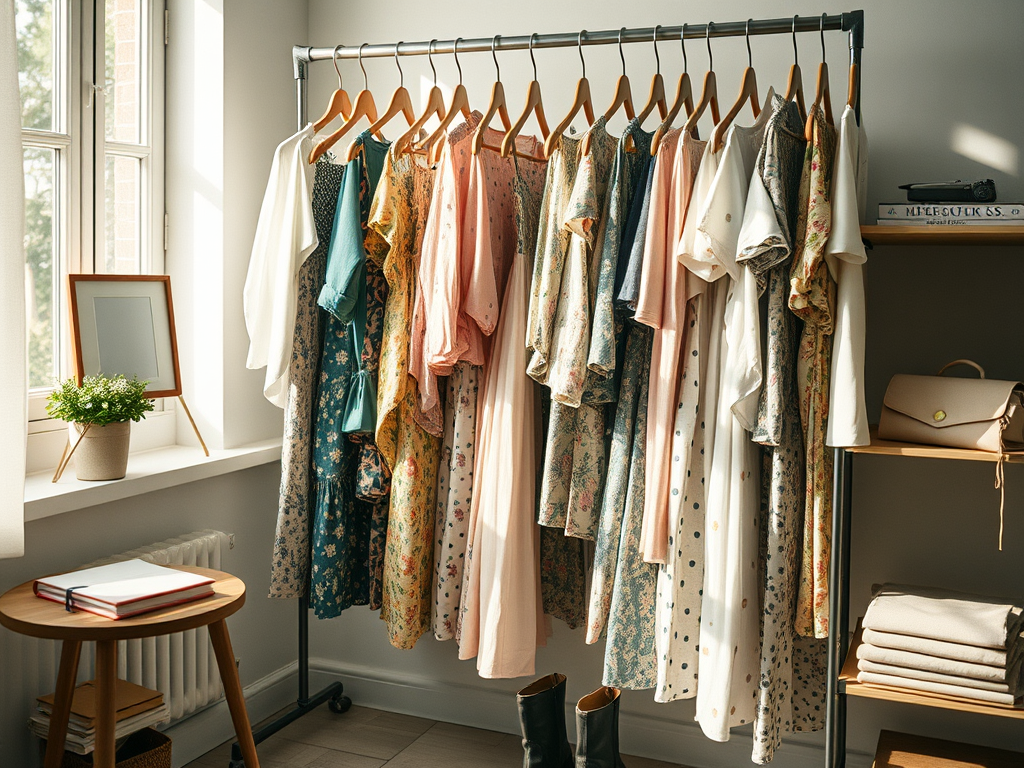
Clothes shopping is where I often would unintentionally go over my budget in the past. This experience has taught me some tips and tricks that have helped me keep my spending in check.
#1 Know Your Budget
This is an important first step. If you don’t know your budget yet, take a look at my other article: How to Start Setting a Budget.
#2 Know What You’re Looking For
The biggest trap many people can fall into is going shopping without a plan. It can be easy to make an impulse purchase that you really don’t need. This is especially true with the influence of social media ads many are faced with on a daily basis. Having a plan can help you stick to your budget in all kinds of shopping (like a grocery list!).
A couple of years ago I read a book called “The Curated Closet.” It presented the idea of taking inventory of what you already have in your closet each season. Do this before purchasing new clothing items. Try on what you have and experiment a little with the items in your closet. You may discover some new outfit combinations that give fresh interest to pieces you already own. You might also find some great, forgotten items buried in the bottom of a drawer. As you’re looking through your closet, start to reflect on what you actually need to be shopping for. Maybe you thought you needed clothes for working out. However, as you sifted through your closet, you realized you have plenty of workout shorts. What you really need are a couple of tops to get the full use out of your closet.
Also, be aware of your lifestyle habits. What outfits do you wear the majority of the time? As a P.E. teacher, I spend most of my week wearing activewear for work. I also wear it for my personal hobbies, like running and hiking. The majority of my closet reflects how I spend the majority of my time. I of course also need clothes for other activities. I have clothes that work for church and for going out with friends or on a date. However, it wouldn’t make sense for me to spend a larger portion of my time and money on finding clothes for these activities when I spend comparatively less time doing these things.
#3 Shop Wisely
First, know how much you can spend. Then, have a plan for what you are going to look for. Once you have these, you can begin to shop. As a teacher, my budget is small. Here are some ways that I like to stretch my money as far as I can.
Shopping Secondhand
I love trying to find what I need at lower prices by shopping secondhand. A couple of my favorite websites to shop secondhand are ThredUp and Poshmark. It’s easy to find clothes that fit my personal style because I can search specifically for the brands that I know I like. I prefer to shop on ThredUp when I can because they accept returns on most items. Poshmark does not accept returns, but it’s a great place to search for specific clothing items. You can use these links below to get discounts:
- ThredUp: 45% off and free shipping
- Poshmark: $10 off
Use Coupons
If I’m not shopping secondhand, I try to find a coupon before paying full price for anything. My favorite resource is the Honey app, which automatically searches for eligible coupons for your purchase before you checkout. With all of the brand ambassadors and affiliate links out there today, there is usually a coupon somewhere to be used. I have saved a lot of money over the years using this app, and it saves me the headache of searching for coupons myself. Here’s the link if you’d like to give it a try yourself: Honey
Save Items for Later
Sometimes I’ll find what looks like the perfect item, but I’ll realize that it does not fit into my budget that month. Instead of going ahead and purchasing it, I like to simply copy and paste the link into a notes section on my phone and save it for later. If it really is as great as I think, I’ll remember it next month and go back for it. However, if it’s not, I’ll either forget or the excitement will wear off by the time the next month rolls around, and I’ll decide not to purchase the item. Taking at least a day or two before pulling the trigger on purchasing an item can also be helpful if you tend to fall into the habit of impulse purchases.
Schedule Your Extra Purchases
Lately I’ve gotten into the habit of scheduling out extra purchases over the span of a few months. In a notes section on my phone, I section out extra spending plans. I do this when I know there are several specific “extra” items I need to purchase at some point. I consider anything that I don’t absolutely have to purchase immediately to be an extra item. For example, I recently got a puppy. I know that as he continues to grow over the next few months, there are some bigger purchases I’ll have to make for him. In my notes section, I planned out my extra expenses. I only wrote in what I could afford to purchase each month. This plan helps me to stay within my budget each month. It allows me to avoid the pressure of needing to purchase something immediately. I do not fear forgetting it or not having it when I need it.
This can obviously work for other things as well. Let’s say that you know you need a new coat this winter or need to replace your swimsuit for next summer, but you’ve already met your budget for extra expenses for this month. Think ahead and write it down to purchase later when you’ll have room in your budget to do so.
Hopefully these tips help you shop smarter and budget wisely! Remember that to change your lifestyle and habits, you need to start small and stay consistent. Don’t try to do it all at once.
As always, feel free to contact me with any questions or with suggestions of what you’d like to learn about in future posts! Thanks for reading!